
Paris Saint-Germain, the reigning Champions League winners, have once again positioned themselves among the strongest contenders in this season’s competition. As they prepare to face Bayern Munich in the semi-final first leg, there is a growing belief that this current PSG side could achieve back-to-back European titles. Interestingly, despite having previously fielded global superstars such as Lionel Messi, Neymar, and Kylian Mbappé, many observers consider this present squad to be the most cohesive and effective in the club’s history.
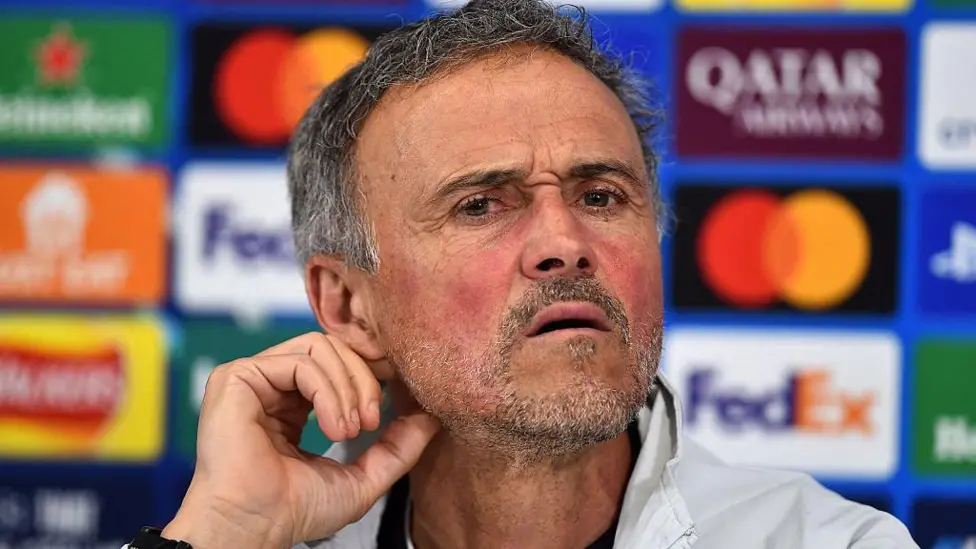
Under the guidance of manager Luis Enrique, PSG have evolved into a tactically sophisticated team built on versatility and adaptability. Earlier this month, Enrique remarked that his ideal squad would consist of players capable of performing in multiple roles across the pitch. This philosophy has been central to PSG’s approach, enabling them to create confusion for opponents and maintain unpredictability in their play.
One of the most striking aspects of PSG’s style is the fluidity of player positions during matches. It is not uncommon to see full-backs making attacking runs into the penalty area while forwards drop deep into midfield roles. For example, Achraf Hakimi’s goal in last season’s Champions League final perfectly illustrated this concept, as the right-back found himself in a central attacking position to score.
While this level of movement may appear chaotic at first glance, it is actually underpinned by a carefully structured system. Luis Enrique has implemented a balance between freedom and discipline through what can be described as “anchors” and “floaters.” This framework ensures that the team maintains its shape while allowing certain players to roam freely.
The “anchors” are players or positions responsible for maintaining structure within the team. Typically, this includes the two central defenders, wide players on both flanks, and a forward presence to stretch the opposition’s defense. These roles are essential in ensuring that the team remains balanced, even as other players move around the pitch.
On the other hand, the “floaters” are players given the freedom to operate in central areas without strict positional constraints. These individuals often combine with teammates through quick passing and intelligent movement, making it extremely difficult for opponents to track them effectively. The interplay between anchors and floaters is what gives PSG their unique tactical identity.
A key principle in this system is the concept of “zone replacement.” PSG aim to occupy specific areas of the pitch at all times. When a player vacates a particular zone, another player immediately moves into that space to maintain the team’s structure. This ensures that, despite constant movement, the overall shape of the team remains intact.
For instance, if winger Khvicha Kvaratskhelia drifts into a central position, left-back Nuno Mendes may push forward to occupy the wide area. This coordinated movement allows PSG to maintain width while also creating overloads in central areas. Such rotations are not random but are based on clear tactical instructions and an understanding among players.
In possession, PSG often build their play from the back with the two central defenders supported by an additional player, forming a temporary back three. The positioning of full-backs like Hakimi and Mendes depends on the movement of their teammates. If a winger moves inside, the full-back typically stays wide. Conversely, if the winger holds a wide position, the full-back may move centrally or advance further up the pitch.
Nuno Mendes, in particular, plays a versatile role. During the build-up phase, he may drop into a defensive position to support the center-backs. However, if a midfielder like Vitinha moves deeper, Mendes gains the freedom to push forward and contribute to the attack. His positioning is constantly adjusted based on the movements of those around him.
Ousmane Dembélé, one of PSG’s most influential players, is given the greatest degree of freedom within this system. As a Ballon d’Or winner, his ability to operate across multiple areas of the pitch makes him a constant threat. Dembélé often drops into midfield to receive the ball, drawing defenders out of position and creating space for teammates to exploit.
His unpredictable movement poses significant challenges for opposing defenses. When he drifts away from his nominal position, defenders are forced to make quick decisions—either follow him and leave gaps behind or hold their position and allow him time on the ball. This dilemma often leads to defensive breakdowns, which PSG are quick to capitalize on.
The effectiveness of PSG’s system also highlights a broader trend in modern football: the rise of man-to-man marking. Teams that rely heavily on tracking individual opponents can struggle against PSG’s fluid approach, as players frequently change positions and disrupt marking schemes. Over time, defenders may lose track of their assignments, leading to opportunities for PSG.
However, such a demanding tactical system requires players of exceptional quality and intelligence. Luis Enrique’s vision of having a squad filled with versatile players is crucial to its success. Each player must be capable of adapting to different roles without compromising performance.
Another important factor is physical fitness. PSG’s style involves constant movement, including high-intensity runs from full-backs who transition quickly between defense and attack. To sustain this level of performance, squad rotation is essential. Fortunately for PSG, their dominance in Ligue 1 allows them to manage player workloads effectively.
For example, Nuno Mendes has played less than half of PSG’s total league minutes this season, ensuring he remains fresh for crucial Champions League matches. This ability to rotate players without a significant drop in quality provides PSG with a competitive advantage over teams with less depth.
In contrast, other semi-finalists such as Arsenal may not have the same luxury, as they rely heavily on a core group of players. This difference in squad management could prove decisive as the tournament progresses.
Ultimately, Luis Enrique has crafted a team that combines tactical intelligence, physical endurance, and technical excellence. PSG’s blend of structure and freedom allows them to dominate possession, create scoring opportunities, and adapt to different opponents.
As they prepare for their semi-final clash with Bayern Munich, PSG’s innovative approach makes them one of the most exciting teams to watch in world football. Their ability to execute such a complex system with precision is a testament to the players’ understanding and the manager’s vision.
If they continue to perform at this level, PSG have a strong chance of defending their Champions League title and further cementing their place among Europe’s elite.
For more sports updates, visit: https://netsports247.com