
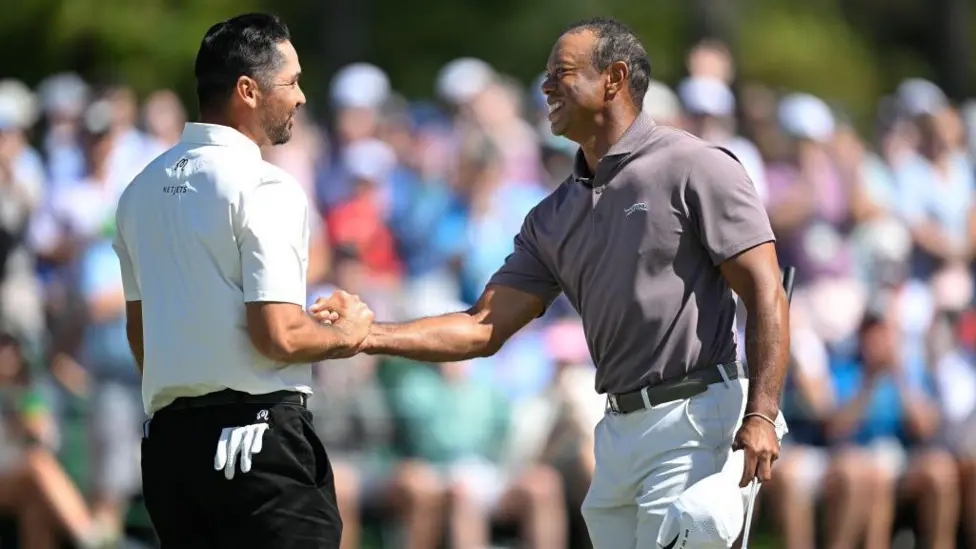
Jason Day has openly criticized fellow golf icon Tiger Woods, calling his recent decision to drive under the influence “a little bit selfish,” while also expressing deep sympathy for the challenges the legendary golfer is currently facing. The situation has sparked widespread discussion across the golfing world, highlighting both accountability and compassion for one of the sport’s greatest figures.
The controversy follows an incident in Florida last month, where Woods, aged 50, was arrested after being involved in a car accident near his home. According to reports, Woods clipped a truck and subsequently rolled his vehicle. Fortunately, no one was injured in the crash, but the seriousness of the situation quickly became evident as details emerged.
Authorities charged Woods with multiple offenses, including driving under the influence, property damage, and refusal to submit to a lawful test. During the arrest, officers reportedly found two white pills in his possession, later identified as hydrocodone—an opioid medication commonly prescribed for pain relief. The discovery raised concerns about Woods’ physical condition and the potential role of medication in the incident.
Woods has since submitted a written plea of not guilty through his legal representatives. Additionally, a judge granted him permission to travel abroad for treatment, signaling that the golfer intends to address underlying health or personal issues. While the legal process continues, the focus has shifted to his well-being and future in the sport.
Speaking ahead of the prestigious The Masters, which begins this week at Augusta National, Day shared his thoughts on the situation. The Australian golfer did not hold back in addressing what he saw as a serious lapse in judgment.
“The only thing I don’t understand is that it’s a little bit selfish to drive and put other people in harm’s way,” Day said. His comments reflect a broader concern about the risks associated with impaired driving, particularly for high-profile figures whose actions can influence public behavior.
However, Day was equally clear in expressing empathy for Woods. He described him as both his childhood hero and a continuing inspiration, emphasizing the profound impact Woods has had on his career and the sport as a whole.
“He was my hero—he still is my hero,” Day explained. “The reason I play golf is because of Tiger and this tournament.” His remarks highlight the complex emotions surrounding the situation: disappointment in Woods’ actions, combined with admiration for his legacy.
Day also acknowledged the immense pressure that comes with being a global icon like Woods. Living under constant scrutiny can amplify personal struggles, making it even more challenging to navigate difficult periods.
“It must be incredibly hard to be who he is,” Day added. “Everything you do is watched and judged.” This perspective underscores the human side of Woods’ story—a reminder that even the most successful athletes face vulnerabilities and setbacks.
Police reports from the incident painted a concerning picture of Woods’ condition at the time of his arrest. An officer noted that Woods was sweating heavily, his pupils were unusually dilated, and his movements appeared slow and lethargic. These observations contributed to the decision to charge him and raised further questions about his state of health.
Woods later stated that he had not consumed alcohol on the day of the crash. When asked by authorities whether he had taken any prescription medication, he responded, “I take a few.” Given his extensive history of injuries and surgeries, this admission is not entirely surprising.
Throughout his career, Woods has undergone numerous medical procedures, including multiple back surgeries. In fact, he had his seventh back operation just last year. These ongoing physical challenges have required pain management, often involving prescription medication.
Day, who has experienced his own share of injuries, spoke candidly about the risks associated with such treatments. “When you go through that many surgeries, the recovery can be incredibly painful,” he said. “Painkillers can help, but they can also lead to problems if not managed carefully.”
He added that he personally tries to avoid relying on strong medications whenever possible, recognizing the potential for dependency or adverse effects. His comments reflect a broader awareness within professional sports about the dangers of overusing pain-relief drugs.
Despite his criticism, Day emphasized that Woods should be viewed with understanding rather than judgment. “At the end of the day, he’s just a human being like everyone else,” he said. “We all have struggles. It’s unfortunate, but it happens.”
Woods’ absence from this year’s Masters is another significant consequence of the incident. The five-time champion, whose last victory at Augusta came in 2019, will not compete in the season’s first major tournament. His absence is deeply felt, not only by fans but also by fellow players who regard him as a central figure in the sport.
In addition to missing the Masters, Woods has also declined the opportunity to serve as the United States Ryder Cup captain in 2027. The decision suggests that he is prioritizing his recovery and personal well-being over professional commitments.
Several players have expressed their support for Woods during this challenging time. American golfer Harris English described him as a legend and a fighter, expressing confidence that Woods will overcome his current difficulties.
“He’s someone we all look up to,” English said. “He’s been through tough situations before, and I believe he’ll get through this as well.” Such sentiments reflect the respect Woods commands within the golfing community.
The impact of Woods’ absence extends beyond individual tournaments. Alongside Phil Mickelson, who is also stepping away from golf due to a family health matter, Woods represents one half of a duo that has defined the sport for decades.
The upcoming Masters will be the first since 1994 without either Woods or Mickelson in the field—a statistic that highlights their enduring influence. For many fans and players, their absence marks the end of an era.
Former Masters champion Patrick Reed acknowledged the impact of their absence, stating that the game feels different without them. “When players like Tiger and Phil step away, it definitely affects the sport,” he said. “But more importantly, we want them to be healthy and come back when they’re ready.”
Woods’ legacy remains firmly intact despite recent events. With 15 major championships and countless achievements, he is widely regarded as one of the greatest golfers in history. His influence has shaped generations of players and transformed the global popularity of the sport.
However, this incident serves as a reminder that even legends are not immune to mistakes. It also highlights the importance of accountability, particularly when actions have the potential to endanger others.
At the same time, the response from fellow players like Jason Day demonstrates the value of empathy and support. Balancing criticism with compassion is essential, especially when dealing with complex personal challenges.
As Woods begins his journey toward recovery, the golfing world will be watching closely. Fans and players alike hope to see him return to the sport he helped redefine, stronger and healthier than before.
In conclusion, Jason Day’s remarks capture the duality of the situation: disappointment in Tiger Woods’ actions, coupled with admiration and concern for his well-being. While the incident has raised serious questions, it has also brought attention to the human side of one of golf’s greatest icons.
For more sports news, updates, and in-depth analysis, visit https://netsports247.com