
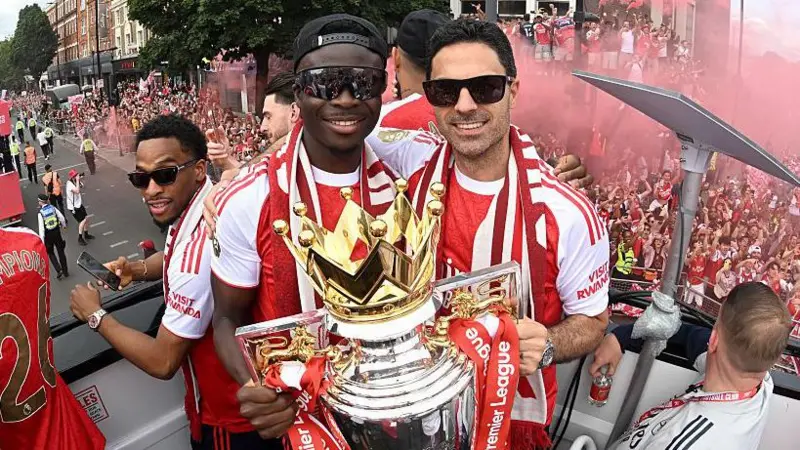
Arsenal may still be feeling the disappointment of their Champions League final defeat, but there is little time for reflection as attention quickly shifts toward future ambitions. Their recent Premier League title celebrations in north London serve as a reminder of how far the club has come, while also reinforcing their determination to build on that success in the upcoming season.
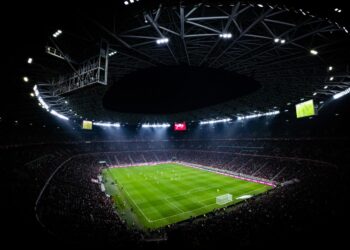
The Gunners fell short against Paris Saint-Germain in Budapest, losing in a penalty shootout after a tightly contested match. Despite the narrow margin of defeat, the game exposed certain weaknesses in Arsenal’s approach when facing elite opposition. Throughout the match, Arsenal struggled to assert themselves, finishing with less than 25% possession. Their only shot on target across 120 minutes came from Kai Havertz, who scored an early goal that briefly gave them hope.
PSG midfielder Joao Neves remarked after the match that his side appeared to be the only team intent on playing attacking football. His comments highlighted the stark contrast in playing styles between the two sides. Arsenal’s approach became increasingly defensive after taking the lead, allowing PSG to dominate possession and dictate the tempo of the game.
Former Arsenal defender Matthew Upson shared his perspective, suggesting that Havertz’s early goal may have influenced Arsenal’s mindset. According to him, had the score remained level during the first half, Arsenal might have continued to play with greater freedom. Instead, the advantage led them to adopt a more cautious strategy, focusing on protecting their lead rather than expanding it.
Upson also pointed out the unusual nature of the possession statistics. In a Champions League final featuring two top-level teams, a 75-25 split in possession is extremely rare. PSG completed an impressive 885 passes compared to Arsenal’s 285, underlining their control of the match.
Arsenal manager Mikel Arteta acknowledged PSG’s superiority on the ball, describing them as the best team in the world. He explained that their technical quality and individual brilliance forced Arsenal into a defensive posture. While it was not part of the original plan to sit deep, PSG’s dominance made it difficult for Arsenal to implement their preferred style of play.
Arteta hinted that his team may need to evolve in order to compete at the highest level consistently. He praised PSG’s ability to maintain control through possession and suggested that Arsenal could benefit from adopting elements of their approach in the future.
Throughout the season, Arsenal have faced criticism regarding their playing style. Despite winning the Premier League title for the first time in 22 years, some observers have questioned whether their reliance on defensive solidity and set-pieces limits their creativity in open play. The team frequently secured narrow victories, with 20 wins across all competitions coming by a single-goal margin.
However, these results should not overshadow their achievements. Arsenal finished the league campaign seven points clear of Manchester City and recorded the best goal difference in the competition. Their defensive strength, led by players such as David Raya, Gabriel Magalhaes, William Saliba, and Declan Rice, has been a cornerstone of their success.
Upson noted that Arsenal’s style earlier in the season appeared more expansive and possession-based. During the opening months, the team displayed fluid attacking movements, often combining effectively around the edge of the penalty area. Players like Bukayo Saka, Martin Odegaard, and Declan Rice played key roles in these intricate passing sequences.
As the season progressed and pressure intensified, Arteta’s side seemed to revert to a more conservative approach. This shift proved effective in securing the league title, but it also raised questions about whether the team can adapt their style to succeed in Europe.
Arsenal’s Champions League campaign was impressive overall. They scored 22 goals in the competition, with the majority coming from open play, and defeated strong opponents such as Atletico Madrid, Bayern Munich, and Inter Milan on their way to the final. However, their inability to control possession in the decisive match suggests there is still room for improvement.
Arteta acknowledged this need for growth, stating that the team must find ways to improve and identify new margins for success. He indicated that changes could be made during the summer transfer window to strengthen the squad and enhance their attacking capabilities.
One area under scrutiny is the forward line. Although Viktor Gyokeres scored 21 goals in his debut season, Arsenal may still look to add more firepower. The club has reportedly shown interest in Atletico Madrid striker Julian Alvarez, who has previous experience in the Premier League.
Additionally, Arsenal are considering reinforcements on the left wing to provide greater balance and creativity in attack. Arteta emphasized that important decisions will need to be made if the team is to reach the next level and compete consistently for major European honors.
Upson believes that adapting the team’s style does not necessarily require a complete overhaul. Instead, small tactical adjustments could make a significant difference. Increasing possession, improving attacking movement, and utilizing full-backs more effectively could help Arsenal become more dynamic going forward.
He highlighted the importance of full-backs in modern football, noting how PSG used them as key attacking outlets during the final. By pushing forward and supporting attacks, full-backs can create additional opportunities and stretch opposition defenses.
Arsenal possess the technical quality needed to implement such changes. Players like Bukayo Saka and Leandro Trossard are highly skilled and capable of thriving in a more possession-oriented system. The challenge lies in balancing defensive stability with attacking ambition.
The upcoming season will be crucial for Arsenal as they aim to build on their recent success. Having overcome the psychological barrier of winning the Premier League, they now have the confidence to pursue further achievements. However, maintaining consistency while competing on multiple fronts will require careful management and strategic planning.
Arteta’s transformation of Arsenal since his appointment in 2019 has been remarkable. With over £900 million invested in the squad, the club has evolved from a struggling side into English champions. The next step is to translate domestic success into European glory.
While the Champions League final defeat was a setback, it also provided valuable lessons. Competing against the best teams in Europe demands not only defensive resilience but also the ability to control games through possession and creativity.
Arsenal’s journey to the final demonstrated their potential, but their performance against PSG highlighted the gap that still exists. Closing that gap will be essential if they are to achieve their ultimate goal of winning Europe’s most prestigious club competition.
As they prepare for the new season, Arsenal face a pivotal moment. The decisions made in the coming months will shape their future trajectory. Whether they choose to refine their existing approach or embrace a more attacking philosophy, the objective remains clear: to establish themselves as a dominant force both domestically and in Europe. https://netsports247.com/