
A dramatic and controversial incident unfolded in Spain’s Segunda División as Real Zaragoza goalkeeper Esteban Andrada now faces serious disciplinary consequences following a shocking act of violence during a heated derby clash against Huesca. The match, already filled with tension due to its importance in the relegation battle, descended into chaos in its closing moments, overshadowing the actual football played on the pitch.
The game carried significant weight for both teams, as Zaragoza and Huesca are battling to avoid relegation with only a handful of matches remaining in the season. Emotions were running high throughout the encounter, with players on both sides showing signs of frustration and desperation as they fought for survival. However, what transpired in stoppage time went far beyond the usual intensity of a derby match.
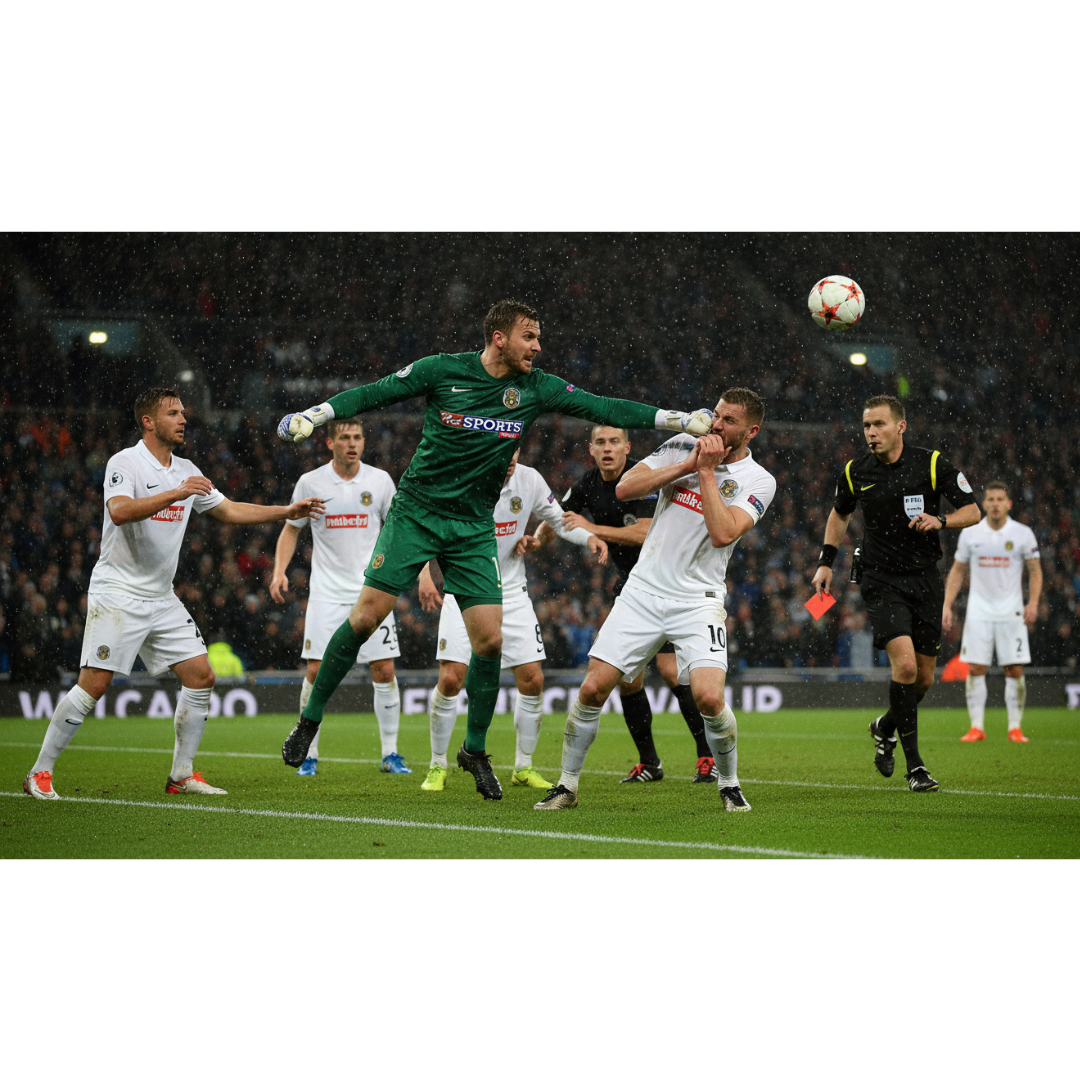
Esteban Andrada, the experienced Argentine goalkeeper, was initially shown a second yellow card after pushing a Huesca player during a confrontation near the end of the match. This dismissal should have marked the end of his involvement in the game, but instead, it triggered a far more serious incident.
As tensions escalated, Andrada suddenly sprinted toward Huesca captain Jorge Pulido and struck him in the face with a punch. The act was unexpected and immediately sparked outrage among players on both sides. What followed was a large-scale confrontation, with players rushing in and a mass brawl breaking out on the pitch.
The situation quickly spiraled out of control, forcing the referee to take further disciplinary action. Huesca goalkeeper Dani Jimenez and Zaragoza player Dani Tasende were both shown red cards as a result of their involvement in the melee. The chaotic scenes left officials struggling to restore order and brought the match to an ugly conclusion.
In the aftermath of the incident, Andrada publicly apologized for his actions, acknowledging that he had made a serious mistake. He admitted that he had “lost focus” in the heat of the moment and expressed regret for the negative image his behavior had created for his club, the fans, and professional football as a whole.
The 35-year-old goalkeeper, who has represented Argentina at international level, emphasized that such behavior is not reflective of his career. He pointed out that prior to this incident, he had only received one red card in his professional career, which came from a handball outside the penalty area. This context, however, does little to mitigate the severity of his actions in this particular match.
Andrada also extended a direct apology to Jorge Pulido, recognizing him as a fellow professional and taking full responsibility for the incident. He made it clear that he is prepared to accept whatever punishment is handed down by the league authorities, acknowledging that his actions were unacceptable.
Real Zaragoza also issued an official statement strongly condemning the events that took place during the match. The club made it clear that the scenes witnessed were completely inconsistent with its values and traditions. Emphasizing the importance of sportsmanship, respect, and professionalism, Zaragoza expressed deep disappointment over the behavior displayed.
The club further stated that it would take appropriate internal disciplinary measures against Andrada, reinforcing its commitment to maintaining high standards of conduct. In its statement, Zaragoza highlighted its role as a representative of the community and a source of inspiration for young fans, stressing that such incidents should never occur in professional football.
Zaragoza’s management also acknowledged the broader impact of the incident, noting that players serve as role models, particularly for children who look up to them. The club expressed regret that such negative scenes were broadcast and witnessed by supporters, undermining the spirit of the game.
From Huesca’s perspective, the incident was equally disappointing. Manager José Luis described the situation as a complete loss of control, admitting that while the high stakes of the match may explain the tension, they do not justify such behavior. He characterized the events as “ugly” and expressed regret that the focus had shifted away from the match itself.
José Luis had hoped that the derby would serve as a celebration of football in the Aragón region, bringing attention to the effort and determination shown by both teams. Instead, the post-match discussion has been dominated by the violent altercation, overshadowing what was otherwise a hard-fought contest.
On the pitch, Huesca secured a narrow 1-0 victory thanks to a goal from Óscar Sielva. The match itself was not particularly high in quality, with both sides struggling to create clear opportunities. However, the intensity and physical nature of the game reflected the high stakes involved, as both teams fight to remain in the division.
Despite the win, Huesca remains in the relegation zone, alongside Zaragoza, with only five games left in the season. This result, while important, does not significantly alter the precarious position both teams find themselves in. The battle for survival is set to continue until the final stages of the campaign.
Zaragoza head coach David Navarro also addressed the incident, offering an apology and acknowledging that certain boundaries must never be crossed. He emphasized that while passion and competitiveness are integral to football, they must always be accompanied by discipline and respect.
The fallout from this incident is likely to be significant. Andrada could face a lengthy suspension, given the severity of his actions and the fact that the punch occurred after he had already been sent off. Such behavior is considered a serious breach of disciplinary rules and is likely to attract strict punishment from league authorities.
Beyond the immediate consequences for Andrada, the incident raises broader questions about player conduct and the pressures associated with high-stakes matches. While emotions can run high in crucial games, maintaining professionalism remains essential to preserving the integrity of the sport.
In conclusion, what should have been an intense but memorable derby has instead become a cautionary tale about the dangers of losing control in competitive environments. Esteban Andrada’s actions have not only put his own career at risk but have also cast a shadow over his club and the match itself. As the season reaches its निर्णing phase, both Zaragoza and Huesca must now refocus on their fight for survival, leaving behind an incident that will likely be remembered for all the wrong reasons.