
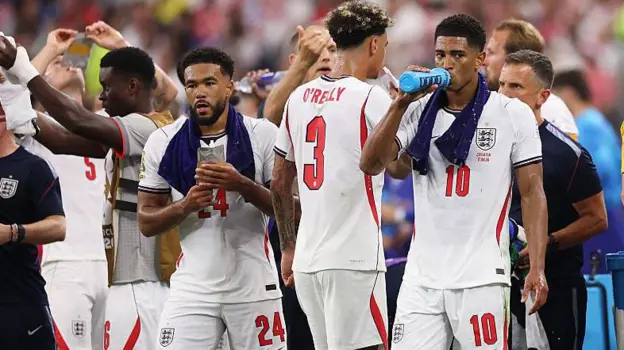
England may have kicked off their 2026 World Cup campaign with an impressive 4-2 victory over Croatia, but despite the positive result, not everything during the match was met with approval from fans. One of the most noticeable reactions inside the Dallas Stadium was the sound of boos echoing around the ground—not directed at players or referees, but at a newly introduced feature in this tournament: hydration breaks.
These breaks, implemented to help players cope with the intense summer conditions in North America, occur twice in each match—once in each half—and last approximately three minutes each. While the intention behind their introduction is centered on player welfare, they have sparked mixed reactions among supporters and pundits alike.
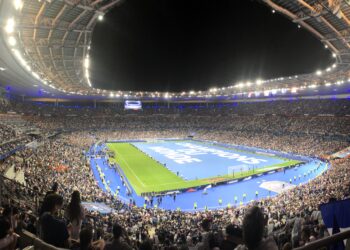
In theory, hydration breaks are designed to allow players to rehydrate and recover during matches played in high temperatures. However, many fans at the England versus Croatia game questioned their necessity, particularly given that the Dallas Stadium is equipped with air conditioning. As a result, both sets of supporters joined together in expressing their frustration, voicing their displeasure loudly each time the game was paused.
A major concern among critics is the belief that these breaks are being used primarily for commercial purposes rather than purely for player health. Broadcasters have taken advantage of the stoppages to air additional advertisements, leading some fans to suspect that financial motivations are driving the decision as much as, if not more than, sporting considerations.
One England supporter highlighted this issue, suggesting that while hydration breaks might be justified in extreme heat conditions, they seemed unnecessary in a controlled, climate-regulated environment. Another fan echoed this sentiment, arguing that such interruptions disrupt the natural rhythm of the game. For many, football’s appeal lies in its continuous flow, and any interruption—especially one perceived as unnecessary—can detract from the viewing experience.
The criticism has not been limited to a single match. Similar reactions have been observed in several other games throughout the tournament. For instance, during Norway’s encounter with Iraq in Boston, fans voiced their dissatisfaction despite relatively mild temperatures of around 23 degrees Celsius. Interestingly, Iraq conceded shortly after play resumed following a hydration break, further fueling debate about whether such pauses can influence momentum.
Matches involving Sweden, Tunisia, Spain, and Cape Verde have also seen fans react negatively to the breaks, even in venues with air-conditioned facilities. The recurring nature of these reactions suggests a growing resistance among supporters to the concept of mid-game stoppages that resemble structured intervals rather than organic pauses.
One of the more prominent criticisms is that hydration breaks effectively divide matches into four quarters instead of the traditional two halves. This has led to comparisons with sports formats more commonly seen in North America, prompting concerns about the “Americanisation” of football. Some fans worry that such changes could alter the fundamental nature of the sport, making it feel less authentic.
Despite the backlash, not all supporters are opposed to the idea. Some acknowledge the potential benefits of hydration breaks, particularly in genuinely hot and humid conditions. One fan suggested that the issue might lie more in how the breaks are presented rather than the concept itself. By rebranding them or adjusting their implementation, it might be possible to strike a balance between player welfare and maintaining the game’s flow.
From a sporting perspective, many players and coaches have welcomed the introduction of hydration breaks. Managers have used these intervals as opportunities to provide tactical instructions, regroup their teams, and adjust strategies. For players, the chance to rehydrate and briefly recover can be valuable, especially in demanding conditions.
England goalkeeper Jordan Pickford described the breaks as a useful preparation tool, particularly for upcoming matches in cities like New York and Boston, where weather conditions may be more challenging. He emphasized the importance of adapting to the new format and using it to the team’s advantage rather than viewing it as a hindrance.
Defender Nico O’Reilly also acknowledged the practical benefits of the breaks, even if he personally felt they were not always necessary. He pointed out that players have already acclimatized to the conditions but recognized that the breaks provide an opportunity to receive instructions and maintain hydration levels.
However, not everyone in the football community is fully convinced. Netherlands captain Virgil van Dijk noted that while the breaks serve a purpose, they may not be ideal from a broadcasting perspective. The interruptions can disrupt the viewing experience, particularly for audiences accustomed to the traditional flow of the game.
The question of whether hydration breaks will become a permanent feature in football remains unanswered. FIFA introduced them for this tournament in response to the challenging weather conditions experienced during previous competitions in the United States. However, there has been no official confirmation that they will be retained in future tournaments.
France manager Didier Deschamps offered a pragmatic view, acknowledging that the breaks effectively create four segments within a match. He emphasized the need for players and coaches to adapt to this new structure, regardless of personal preferences.
Among fans, opinions remain divided. Some believe that hydration breaks are likely to become a regular part of the game, particularly if they continue to generate additional revenue for broadcasters. Others hope that they will remain a temporary measure, used only when absolutely necessary.
For many supporters, the concern is not just about the breaks themselves but what they represent. The fear is that football could gradually shift toward a more commercialized model, where entertainment and revenue generation take precedence over tradition and sporting integrity.
As the tournament progresses, the debate surrounding hydration breaks is unlikely to subside. Whether they are ultimately embraced or rejected will depend on how they are perceived by players, coaches, and fans alike.
In the meantime, England’s strong start to the World Cup has provided plenty of optimism on the pitch, even as discussions off it continue to dominate headlines. The challenge for football’s governing bodies will be to find a balance that preserves the essence of the game while addressing the practical demands of modern competition.