
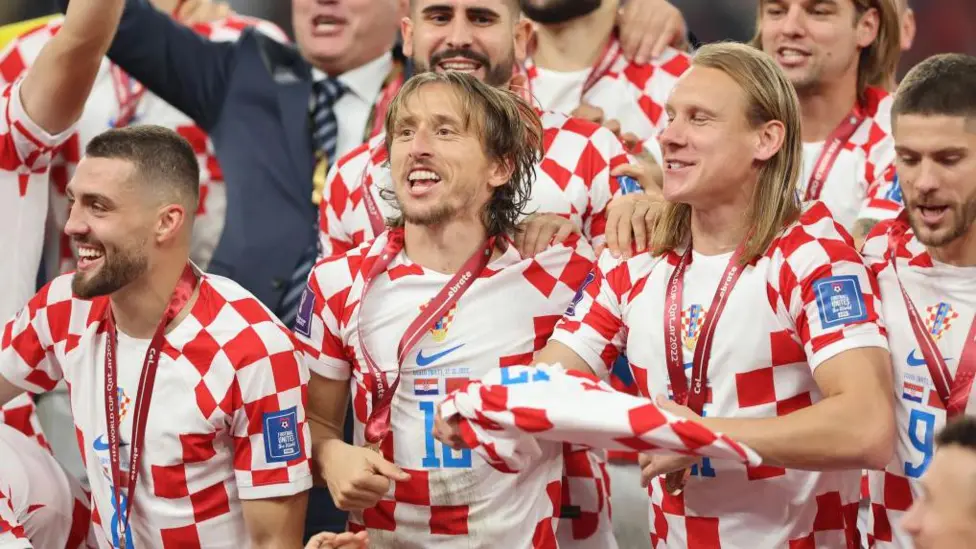
As a young and slender teenager, Luka Modric was known not only for his footballing talent but also for his attachment to his long, flowing hair. However, this seemingly harmless trait became a point of concern for his coach at the time, Romeo Jozak. The coach recalls how Modric’s habit of flicking his hair during play occasionally interfered with his focus on the game.
Jozak now looks back on those early days with a smile, admitting that he had no idea the young boy he coached would one day become one of the greatest footballers in history. At the time, Modric’s attention to his hairstyle seemed like a distraction, and it even led to disagreements between the two. Eventually, as the authority figure, Jozak insisted that Modric cut his hair—a decision the young midfielder reluctantly accepted.
Fast forward to today, Modric has not only regrown his signature locks but has also built an extraordinary career. From that slight teenage frame has emerged a footballing icon who has achieved remarkable success, including multiple Champions League titles and the prestigious Ballon d’Or. His journey from a modest beginning to global stardom is both inspiring and symbolic of perseverance.
Now at the age of 40, Modric continues to defy expectations. He remains a central figure for Croatia and is set to captain his national team in their 2026 World Cup opener against England. His longevity in the sport and continued influence on the pitch highlight his exceptional professionalism and dedication.
The relationship between Modric and Jozak has evolved over the years. What once included disagreements over small matters like hair has turned into mutual respect and admiration. Jozak recalls how Modric once joked that only the army and his coach had ever convinced him to cut his hair. Today, that anecdote serves as a reminder of how far Modric has come.
Modric’s rise is not just a personal success story; it is also deeply connected to the history of Croatia. His childhood was marked by the hardships of war, as the country fought for independence in the early 1990s. At just six years old, Modric experienced the tragic loss of his grandfather, who was killed during the conflict. His family home was destroyed, and his father joined the war effort.
As a result, Modric and his family were forced to relocate to the city of Zadar, where they lived as refugees. Despite these difficult circumstances, young Modric found solace in football, often playing with other children who had also been displaced. These experiences shaped his character, instilling resilience and determination that would later define his career.
During this period, Croatia was also establishing itself on the international football stage. After gaining independence, the national team quickly made an impact, achieving notable success in tournaments such as Euro 1996 and the 1998 World Cup. These early achievements laid the foundation for the country’s footballing identity.
According to Jozak, the experiences of war contributed to the mentality of Croatian players. While he emphasizes that motivation comes from within, he acknowledges that the hardships faced by many players have left a lasting impression. This combination of personal drive and national pride has been a key factor in Croatia’s consistent overachievement on the global stage.
Despite being a relatively small nation, Croatia has repeatedly competed with and defeated larger footballing countries. This success has fostered a sense of confidence among players and reinforced their belief in their abilities. For Modric, representing his country has always been a source of immense pride.
However, Modric’s path to stardom was not straightforward. As a young player, he was often overlooked due to his physical attributes. Even Jozak admits that while Modric showed promise, he was not considered among the top prospects at the time. His slight build led some to doubt whether he could succeed at the highest level.
To gain experience, Modric was sent on loan to clubs where he could develop his skills and toughness. A spell in Bosnia proved particularly challenging but also crucial for his growth. Playing in a demanding environment helped him build resilience and sharpen his competitive edge.
Jozak describes Modric as having an intense drive and determination, likening him to a relentless competitor who never backed down from challenges. This mentality played a significant role in his development and eventual success.
At Dinamo Zagreb, Jozak fostered an environment of intense competition among young players. Training sessions were highly competitive, pushing players to constantly improve. This internal rivalry helped produce a generation of talented footballers who would go on to achieve success both domestically and internationally.
When Jozak later took on a leadership role within Croatian football, he contributed to the development of a structured system for nurturing talent. Under his guidance, Dinamo Zagreb became known as one of Europe’s leading academies, producing players who would go on to play for top clubs across the continent.
Modric’s move to Tottenham Hotspur in 2008 marked a significant step in his career, and he was soon followed by other Croatian talents making their mark in Europe. This wave of players further strengthened Croatia’s reputation as a producer of high-quality footballers.
One of the key elements of this success has been the emphasis on technical skills and a deep connection with the ball. Jozak believes that players should always feel comfortable with the ball, incorporating it into every aspect of their training and daily routines.
This philosophy has influenced the development of many players, including those who have gone on to represent Croatia at the highest level. The national team now benefits from a steady pipeline of talent, with players gaining experience in some of the world’s top leagues.
The current Croatian squad reflects this blend of experience and youth. While veterans like Modric continue to lead, a new generation of players is emerging, ensuring the team remains competitive. Young talents are being integrated into the squad, providing fresh energy and maintaining the team’s high standards.
The role of leadership within the team is also crucial. The head coach has played a significant part in fostering strong relationships among players and maintaining a positive team environment. Understanding the emotional and social dynamics of the squad has been key to Croatia’s recent successes.
Croatian players are known for their passion, discipline, and unity. The sense of camaraderie within the team is evident, and it contributes to their ability to perform under pressure. This collective spirit, combined with individual talent, has allowed Croatia to achieve remarkable results on the international stage.
As Modric prepares to lead his team once again, his story serves as a testament to perseverance, resilience, and belief. From a war-affected childhood to becoming a global football icon, his journey embodies the spirit of Croatian football.
With the World Cup approaching, all eyes will be on Modric and his team as they aim to continue their legacy. Regardless of the outcome, his impact on the sport and his country is undeniable, making him one of the most inspiring figures in modern football.
👉 Read more sports stories and updates here: https://netsports247.com/