

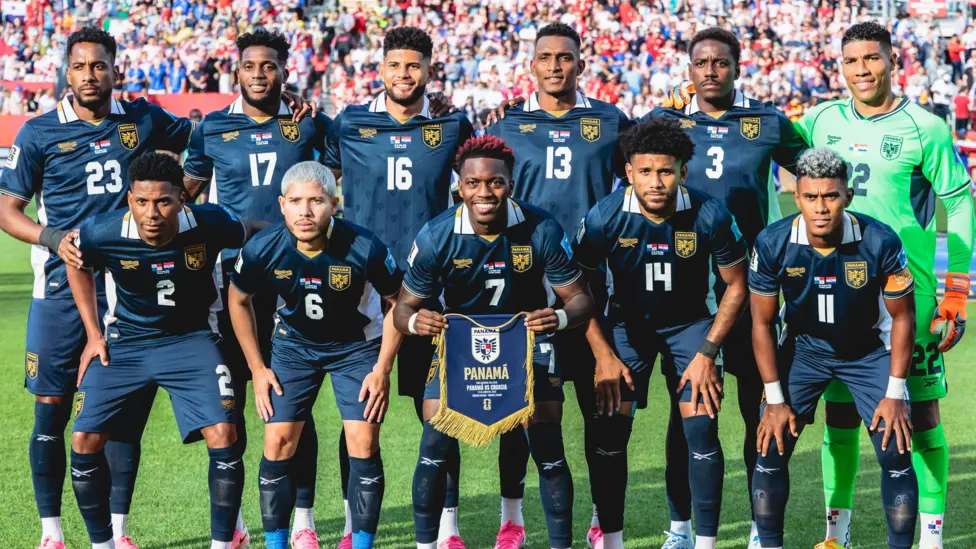
England head into their final World Cup group-stage match against Panama with confidence, knowing that a victory would secure top spot in their group. Having collected four points from their opening two matches, the Three Lions are in a strong position, but they will still need a composed and effective performance to ensure they finish at the summit.
Panama, meanwhile, may not be one of the most well-known teams in international football, but they have proven to be a competitive and unpredictable opponent throughout the tournament. While their results so far may not fully reflect their performances, they have shown enough quality to suggest they should not be underestimated.
In matches against Ghana and Croatia, Panama displayed moments where they arguably looked like the stronger side. Their ability to compete with more established teams has been impressive, even if they have struggled to translate their play into tangible results. A major factor behind this issue has been the absence of one of their key players, Adalberto Carrasquilla, whose injury has limited their attacking effectiveness.
The Panamanian side, coached by Thomas Christiansen, has adopted a flexible tactical approach during the tournament. Rather than sticking to a single formation, they have adjusted their shape depending on the situation and phase of play. This adaptability has allowed them to remain competitive, even against technically superior opponents.
When pressing from opposition goal-kicks, Panama typically set up in a 4-4-2 formation, applying high pressure to disrupt build-up play. Their intention is to force mistakes and regain possession in advanced areas of the pitch. However, when facing teams with strong technical ability, they are quick to retreat into a more compact structure.
In such situations, Panama often transitions into a 5-3-2 formation, creating a mid-block designed to make it difficult for opponents to progress through central areas. This defensive organization focuses on closing passing lanes and forcing teams to play around them rather than through them.
Against Croatia, as the game progressed and pressure increased, Panama adopted an even deeper defensive approach. Their formation shifted into a 5-4-1, with the defensive line dropping closer to their own goal. This setup prioritizes solidity and reduces space in dangerous areas, but it can also limit their ability to counter-attack effectively.
For England, this tactical flexibility presents both challenges and opportunities. If Panama choose to press high, it could play directly into England’s strengths. The Three Lions are particularly effective when exploiting space left behind by aggressive pressing, using quick transitions to create goal-scoring opportunities.
This was evident in Panama’s match against Ghana, where they conceded a late goal after committing players forward in search of a winner. When they lost possession, Ghana quickly moved the ball into attacking areas, taking advantage of the space left open by Panama’s high press.
England’s approach under Thomas Tuchel has often involved drawing opponents out of their defensive shape. By encouraging teams to press, they create gaps between defensive and attacking units, which can then be exploited through quick forward passes. If Panama adopt a similar pressing strategy, England could find themselves in favorable attacking situations.
However, Panama’s approach sits somewhere between the styles of Ghana and Croatia. While they are capable of pressing, they also show a willingness to sit deeper and remain compact. This hybrid style means England must be prepared for multiple tactical scenarios.
One of the most effective ways to break down Panama’s defense could be by playing around them rather than through them. With a 5-4-1 formation, Panama’s central areas are well protected, but their width can be exposed. Unlike Ghana, who used a five-man midfield to cover the pitch effectively, Panama’s four midfielders may struggle to cover wide areas consistently.
This creates opportunities for England to stretch the play and switch the ball quickly from one side to the other. By doing so, they can find space for their full-backs and wingers, forcing Panama’s wing-backs out of position.
Croatia successfully exploited this weakness by using wide players to pull defenders out of shape. Their goal came from a sequence where a winger moved wide, dragging a defender with him, while a full-back overlapped into the space created. This kind of movement is difficult for a defensive unit to track, particularly when they are shifting laterally.
England have already shown similar patterns in their own play. Keeping wingers high and wide has been a key feature of their attacking strategy, and they could use this approach effectively against Panama. By stretching the opposition and creating gaps between defenders, they can generate high-quality chances.
Another potential avenue for England is playing over Panama’s defensive line. Compared to Ghana, Panama tends to hold a slightly higher line, even when in a defensive shape. This leaves space behind their defenders, which can be exploited with well-timed runs and accurate passing.
Harry Kane could play a crucial role in this aspect. If given the freedom to drop deeper into midfield, he can act as a playmaker, delivering precise passes into the space behind Panama’s defense. This strategy has been used effectively by other teams and could provide England with another attacking option.
While Panama have shown defensive discipline, they also possess technical quality when in possession. Players like Cristian Martinez have demonstrated the ability to operate in tight spaces and link play effectively. Their willingness to absorb pressure and build attacks patiently can make them dangerous on the counter.
However, one of Panama’s main weaknesses has been their inability to convert chances into goals. Their attacks often result in crosses into the penalty area, but they lack a consistent finisher to capitalize on these opportunities. This limitation has prevented them from turning promising performances into positive results.
England’s strong counter-pressing could also play a significant role in the match. By quickly regaining possession after losing the ball, they can limit Panama’s ability to build attacks and maintain sustained pressure.
Ultimately, the outcome of the match may depend on how Panama choose to approach the game. With no chance of progressing to the next round, their level of motivation and any potential squad rotation could influence their performance.
For England, the objective is clear: secure a win and finish top of the group. While they are favorites, they will need to remain focused and adaptable to overcome a Panama side that has shown it can compete despite its limitations.
For more sports news and updates, visit: https://netsports247.com/